
Short answer: A heat pump works best in a room that holds its heat. Windows are where rooms lose the most heat, especially on cold, windy nights when a heat pump is working hardest. Closing insulating cellular shades at dusk reduces that loss, helping the heat pump keep the room comfortable and run less. In summer, the same shades block solar heat and help in cooling mode.
Key takeaways
- Heat pumps lose capacity as outdoor temperatures drop; reducing heat loss helps them keep up.
- Windows lose far more heat than walls.
- Cellular shades are the most effective window covering for this.
- Close shades at dusk in winter and open south windows on sunny days.
- In summer, close south and west shades during the hottest hours.
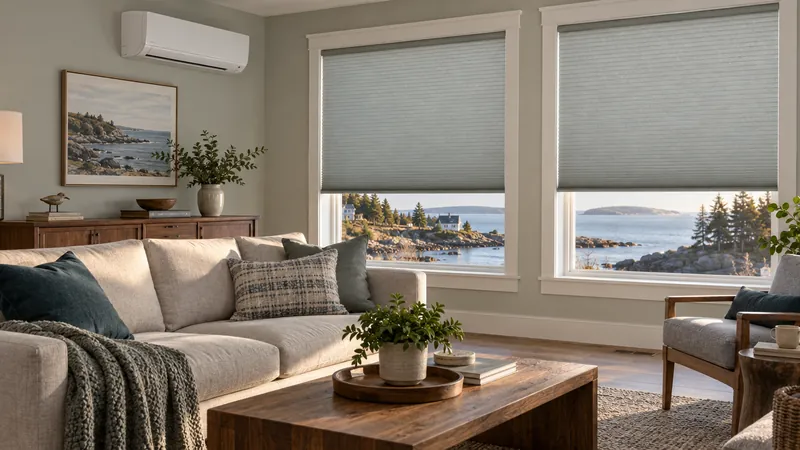
Heat pumps are everywhere now
Across Nova Scotia, New Brunswick, PEI and Newfoundland, ductless and ducted heat pumps have become the most common heating upgrade of the past decade, helped along by provincial rebate programs. They are efficient, they cool in summer, and for many households they replaced or supplemented oil.
But heat pumps have a quirk that window coverings help with.
The cold-night problem
A heat pump moves heat from outdoors to indoors. The colder it gets outside, the harder that job becomes, and the less heat the unit can deliver. Modern cold-climate heat pumps handle Atlantic winters well, but on the coldest, windiest nights they are working near their limit.
Those same nights are when your windows lose the most heat. The wind strips warmth off the glass, cold air slides down and across the floor, and the heat pump runs flat out trying to keep up. Many homeowners notice the room by the window never quite feels warm.
How window coverings help
Anything that reduces heat loss reduces the load on the heat pump. Windows are the obvious target: even a good double-pane window insulates far less than the wall around it.
Cellular shades create a layer of still, trapped air between the glass and the room. The US Department of Energy found they can cut heating energy use by up to 20% compared with bare windows, and its research specifically reported savings in heat pump homes.
The practical result: the heat pump does not have to work as hard, the room by the window feels warmer, and the unit is more likely to keep up on the worst nights without a backup heat source kicking in.
Which window coverings help most
| Covering | Help in winter | Notes |
|---|---|---|
| Double-cell cellular with side channels | Most | Seals edges; best for cold rooms |
| Single-cell cellular | Strong | Good for most rooms |
| Blackout cellular | Strong | Insulates and darkens |
| Lined Roman shade | Good | Thermal lining adds a layer |
| Roller shade (blackout) | Modest | Single dense layer |
| Wood, faux wood, aluminum blinds | Little | Gaps between slats |
| Solar shades | Little | Open weave; for glare, not warmth |
Simple habits that make the difference
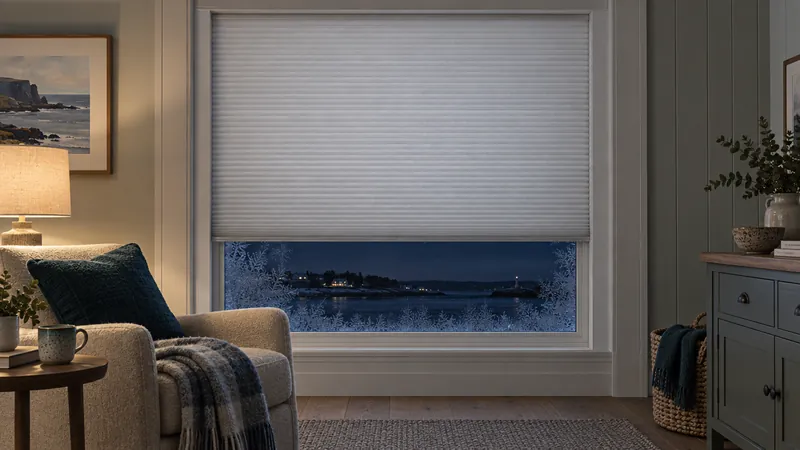
- Close insulating shades at dusk from October to April. In December that is around 4:15 to 4:45 p.m. across most of the region.
- Open south-facing shades on sunny winter days to let the low sun warm the room for free.
- Keep the heat pump's airflow clear. Do not let a shade hang in front of the indoor unit's air path.
- In summer, close south and west shades from late morning to late afternoon to reduce cooling load.
- Let a schedule do it. Motorized shades on a sunset schedule capture the savings every day without anyone remembering.
Where to start
If you are not doing the whole house, start with:
- The rooms where the heat pump struggles most (often the ones farthest from the indoor unit).
- North-facing rooms, which get no winter sun.
- Bedrooms, where blackout cellular adds darkness too.
- Large windows and patio doors near the heat pump's main living space.
How we approach this at Atlantic Shades
A lot of our customers call us within a year of installing a heat pump, once they realize the room by the big window still feels cold on windy nights. Cellular shades are the natural next step, and we make them in our Halifax workshop to fit tightly in each window.
Get a comfort quote · See energy-efficient blinds
Frequently asked questions
Do blinds help a heat pump?
Yes. Insulating window coverings, especially cellular shades, reduce heat loss through windows, so the heat pump does not have to work as hard to keep the room warm, particularly on cold, windy nights.
What are the best blinds to use with a heat pump?
Cellular shades, ideally double-cell with side channels in the coldest rooms. They trap insulating air against the glass and seal the edges.
Should I close my blinds at night in winter?
Yes. Closing insulating shades at dusk reduces heat loss through windows overnight. Open south-facing ones on sunny days to let in free solar heat.
Do blinds help with heat pump cooling in summer?
Yes. Closing shades on south and west windows during the hottest hours blocks solar heat and reduces the cooling load.
Are there rebates for blinds with heat pumps?
Provincial efficiency programs in Atlantic Canada focus on heat pumps, insulation and windows, and generally do not include window coverings. Check Efficiency Nova Scotia, NB Power, efficiencyPEI and takeCHARGE for current offers.
Related: Are cellular shades worth it? · Smart blinds for Google, Alexa and HomeKit · Window coverings for heritage homes