
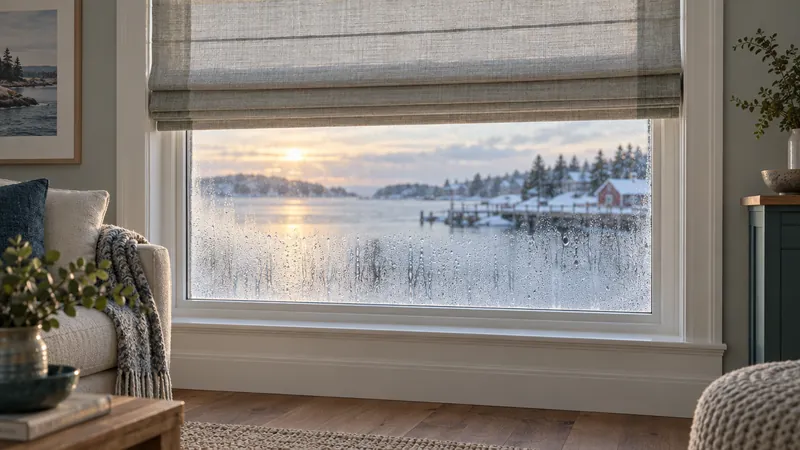
Short answer: Condensation forms behind blinds when warm, moist indoor air reaches cold window glass and the trapped air behind the blind gets colder still. To reduce it, lower indoor humidity, run bathroom and kitchen fans, leave blinds slightly open or raised overnight in the coldest weather, and wipe sills. Choose polyester, vinyl or faux wood products, which resist mould.
Key takeaways
- Condensation is a humidity and cold-glass problem, not a blind problem.
- Insulating shades make the glass colder, so a little airflow helps on frigid nights.
- Keep indoor humidity around 30% to 40% in winter.
- Mould-resistant materials: polyester, vinyl-coated fabrics, faux wood, aluminum.
- Persistent heavy condensation can point to bigger ventilation or window issues.
This guide is general information. If you have extensive mould, or anyone in the home has health concerns, consult a qualified building or health professional.
Why it happens
Warm air holds more moisture than cold air. When warm, humid indoor air touches a surface colder than its dew point, the moisture turns to water. In winter, the coldest surface in most rooms is the window glass.
Here is the twist. A blind or shade, especially an insulating one, traps a layer of air between itself and the glass. That layer is cut off from the room's heat, so it gets colder, and the glass gets colder too. If moist air finds its way into that space, condensation forms faster.
That is why people often notice more condensation after installing good insulating shades. The shades are doing their job; the humidity is the problem.
Why Atlantic homes see so much of it
- Damp climate. Coastal air in Nova Scotia, PEI, New Brunswick's Fundy shore and Newfoundland is humid much of the year.
- Long heating seasons. Months of cold glass.
- Older windows. Single-pane and early double-pane glass gets colder than modern windows.
- Tight renovations. New insulation and air sealing without matching ventilation can trap moisture indoors.
How to reduce condensation
1. Lower indoor humidity
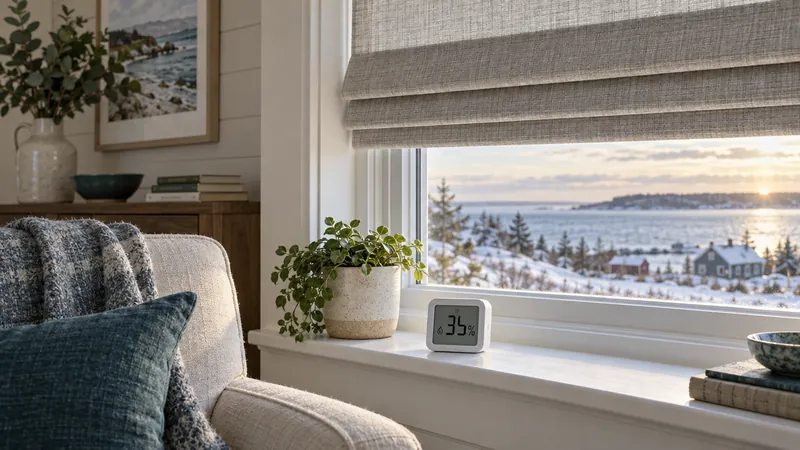
Aim for roughly 30% to 40% relative humidity in winter; lower in the coldest weeks. A cheap hygrometer tells you where you are.
2. Ventilate at the source
Run the bathroom fan during and for about 20 minutes after showers. Use the range hood while cooking. Dry laundry outdoors or in a vented dryer. If you have an HRV or ERV, make sure it is running and maintained.
3. Let some air reach the glass on very cold nights
Leave blinds tilted open, or raise shades a few centimetres from the sill, on the coldest nights. You lose a little insulation; you gain air circulation that keeps the glass warmer.
4. Keep heat moving near windows
Do not block heat registers or the airflow from a heat pump head with furniture or long drapery.
5. Wipe sills in the morning
A quick wipe stops water from pooling, soaking wood and feeding mould.
Dealing with mould on blinds
Small spots on hard surfaces (faux wood, aluminum, vinyl): wipe with warm water and mild detergent, then dry thoroughly.
Fabric shades: spot-clean gently with mild soap and water and dry fully. Test first on a hidden area. Heavy or recurring mould in fabric usually means the shade should be replaced.
Wood: mould can stain and penetrate. Clean gently and dry; badly affected slats may need replacing.
Fix the cause. Cleaning without lowering humidity just resets the clock.
Choosing mould-resistant window coverings
| Material | Moisture resistance |
|---|---|
| Faux wood (PVC, composite) | Excellent |
| Aluminum | Excellent |
| Polyester and vinyl-coated fabrics (roller, solar, cellular) | Very good |
| Real wood | Fair; avoid damp rooms |
| Cotton, linen, natural woven | Poor in damp rooms |
When to call a professional
If condensation runs down the glass every morning, pools on sills, or you see mould on walls and ceilings, the problem is bigger than window coverings. A building envelope or ventilation specialist can check humidity sources, ventilation and window condition.
How we approach this at Atlantic Shades
In damp rooms and coastal homes, we recommend moisture-resistant fabrics and faux wood, and we talk through humidity and airflow at the measure. Insulating shades and good ventilation work well together.
Frequently asked questions
Why is there condensation behind my blinds?
Warm, moist indoor air is reaching cold window glass, and the air trapped behind the blind is colder still. Lowering indoor humidity and allowing some airflow to the glass reduces it.
Do cellular shades cause condensation?
They do not create moisture, but by insulating the window they make the glass colder, which can increase condensation if indoor humidity is high. Keep humidity moderate and raise or open shades slightly on the coldest nights.
How do I stop mould on my window blinds?
Lower indoor humidity, ventilate bathrooms and kitchens, wipe condensation from sills and choose mould-resistant materials such as faux wood, aluminum or polyester fabrics.
What humidity should my house be in winter?
Roughly 30% to 40% relative humidity in winter, lower during the coldest weeks, is a common guideline to limit condensation.
Should I close my blinds at night in winter if I get condensation?
You can, but on the coldest nights leave a small gap or tilt slats open so some room air reaches the glass.
Related: Best blinds for bathrooms and kitchens · How to clean blinds and shades · Best blinds for coastal homes