
Short answer: The best blinds for coastal homes are made from materials that shrug off moisture and salt: polyester roller, solar and cellular shades, faux wood and aluminum blinds, with corrosion-resistant hardware. Use solar shades to cut glare off the water while keeping the view, cellular shades for warmth on windward walls, and avoid real wood and natural fibres in damp rooms.
Key takeaways
- Moisture and salt attack wood, natural fibres and cheap metal hardware.
- Solar shades keep the view and cut water glare.
- Windward walls need insulation, not just style.
- Fog and humid air mean condensation; airflow helps.
- Coastal does not mean nautical. Simple, natural colours age best.
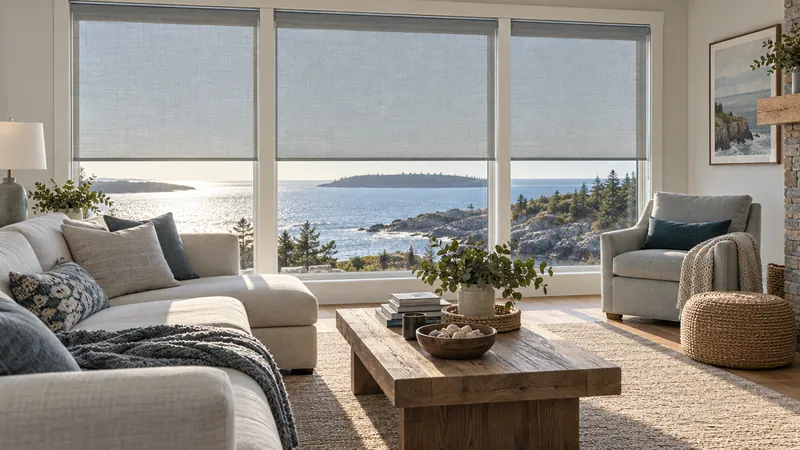
What the coast does to window coverings
Atlantic Canada has more coastline than almost anywhere, and a lot of us live within sight of it. That view comes with conditions:
Salt air. Fine salt carried on the wind settles on everything and draws moisture. Over time it corrodes unprotected metal.
Humidity and fog. Fundy fog, Avalon fog, South Shore fog. Damp air gets into fabric, wood and hardware.
Glare. Sunlight reflecting off water, ice and snow is far brighter than light off a lawn. In winter, with the noon sun at about 19 to 23 degrees across most coastal communities, that glare comes in at eye level.
Wind. Water-facing walls take the full force of winter wind, stripping heat off the glass.
Seasonal closing. Cottages sit unheated and damp for months.
Materials that hold up
| Material | Coastal performance | Use it for |
|---|---|---|
| Polyester fabrics (roller, solar, cellular) | Excellent | Most windows |
| Vinyl-coated fabrics | Excellent | Bathrooms, cottages, rentals |
| Faux wood | Excellent | Kitchens, bathrooms, cottages |
| Aluminum | Very good | Small windows, offices, basements |
| Real wood | Fair | Dry living spaces away from the water side |
| Cotton, linen, natural woven | Poor | Avoid on the water side and in damp rooms |
Hardware matters too. Brackets, clutches and bottom rails should be corrosion-resistant within sight of salt water. Cheap steel hardware can show rust in a few seasons.
The best options by job
Glare off the water: solar shades
A woven screen fabric that blocks most direct light while you see out. Choose 3% openness for most rooms, 1% for strong direct sun, and a darker colour for the clearest view. Solar shades.
Warmth on windward walls: cellular shades
Insulating honeycomb fabric, double cell on the most exposed walls, with side channels where drafts are worst. Cellular shades.
Kitchens, bathrooms, mudrooms: faux wood or vinyl roller
Wipe-clean and unbothered by steam or wet boots. Faux wood blinds.
Bedrooms: blackout
Summer sunrise on the coast is early: about 5:30 a.m. in Halifax and on the South Shore, about 5:20 a.m. on PEI's north shore, about 5:03 a.m. in St. John's. Blackout roller or cellular with side channels. Blackout blinds.
Day and night on big view windows: dual rollers
Solar in front for the view by day, blackout or privacy behind for night.
Fog, condensation and mould
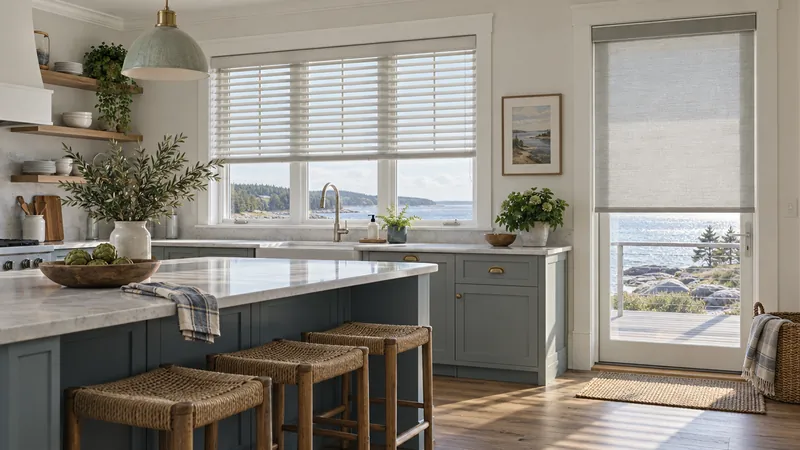
Coastal homes see more condensation in winter, because humid air meets cold glass. Keep indoor humidity moderate, run fans, leave shades slightly open on the coldest nights and wipe sills. Choose mould-resistant fabrics. Condensation and mould behind blinds.
A note on style
Coastal homes look best with window coverings that do not compete with the view. Whites, sands, warm greys, soft blues and natural textures age gracefully. Anchors, rope pulls and nautical prints date quickly. Let the water do the decorating.
Closing a coastal cottage for winter
- Raise all shades fully so fabric is not pressed against cold, wet glass.
- Wipe down faux wood and aluminum.
- Leave a little ventilation if you can.
- Check hardware for rust in spring.
How we approach this at Atlantic Shades
We live on this coast too. Our fabrics, finishes and hardware are chosen for humidity, salt air and strong low-angle sun. It is part of what "made for Atlantic light" means. Every shade is made to measure in our Halifax workshop, a few kilometres from the harbour.
Book a free measure · See the Atlantic Light data for your town
Frequently asked questions
What blinds are best near the ocean?
Polyester roller, solar and cellular shades, faux wood and aluminum blinds, with corrosion-resistant hardware. They resist moisture, salt and mould far better than real wood or natural fibres.
Will salt air damage my blinds?
It can corrode unprotected metal hardware and degrade natural materials over time. Choosing moisture-resistant fabrics and corrosion-resistant components prevents most damage.
How do I reduce glare from the water?
Use solar shades. A 3% openness in a darker colour cuts most glare while keeping a clear view of the water during the day.
Are wood blinds OK in a beach house?
Only in dry rooms away from the water side. Faux wood gives a similar look and handles humidity much better.
What colour blinds suit a coastal home?
Whites, sands, warm greys, soft blues and natural textures. Simple colours suit the view and age well.
Related: Window coverings for cottages and rentals · Condensation and mould behind blinds · Wood vs faux wood blinds